
Category: Postplagiairism
-
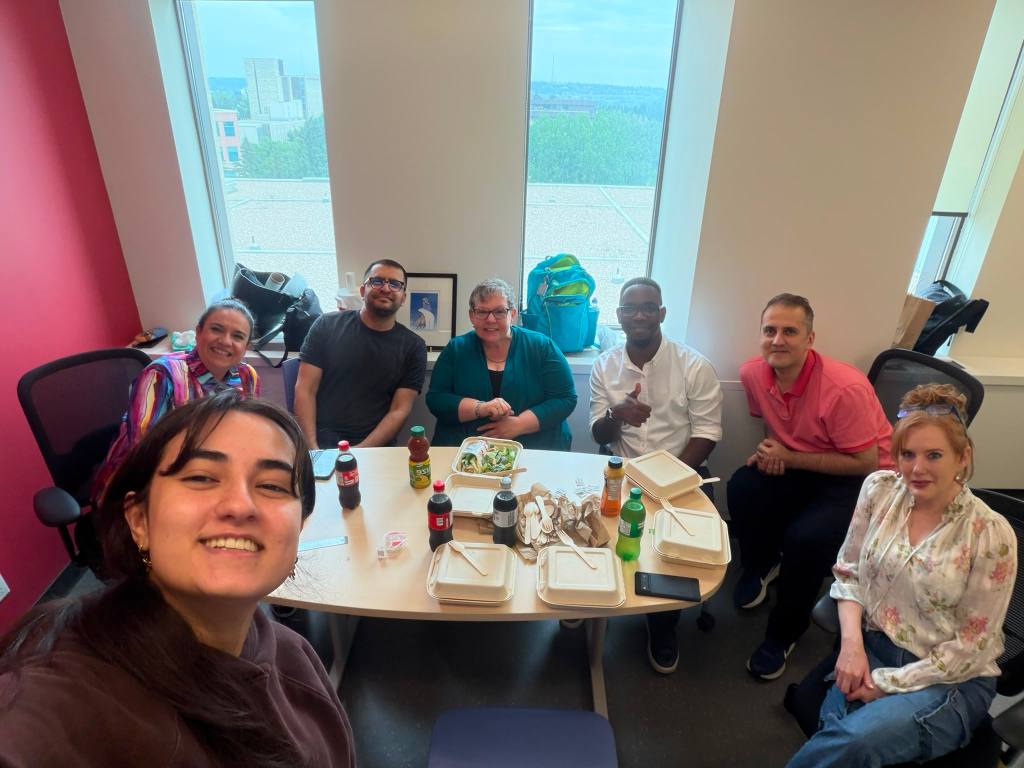
Undergraduate Science Students’ Perspectives on Inclusive and Ethical Generative AI in University Assessment
by Sarah Khalifa and Sarah Elaine Eaton Introduction In this blog post we report on a student-led project funded by the University of Calgary’s UREX Summer program, formerly known as the Program for Undergraduate Research Experience (PURE). Sarah Khalifa, a fourth-year Science undergraduate student, conducted the research supervised by Dr. Eaton. Generative artificial intelligence (GenAI) is…
-

Postplagiarism, Now Available in Prescription Strength
Weaver Shaw describes her experience using AI-enabled glasses that provide real-time translation and other functionalities, which challenge traditional boundaries of communication and responsibility. This new technology facilitates multilingual interactions but raises ethical questions about privacy, oversight, and authorship in educational contexts, emphasizing the need for an evolved understanding of engagement and creativity in a technology-driven…
-

A Week at the Postplagiarism Research Lab: International Connections and New Ideas
In July, the Postplagiarism Research Lab at the University of Calgary welcomed researchers from various backgrounds. Colombian doctoral student Paola Sáenz reflected on her enriching visit, where she received valuable feedback on her research and engaged in meaningful discussions with lab members. The experience highlighted the importance of international collaboration in academia.
-

As the Final Whistle Blows
As the FIFA World Cup concludes, technology’s integration into football is evident, with tools like VAR enhancing officiating. Fuat Ramazanov’s concept of “postplagiarism” emphasizes the collaboration between human judgment and technology across various fields. It advocates for responsible use of AI, asserting that humans remain accountable, even with advanced tech assistance.
-

From Technical Accuracy to Human Judgment: Postplagiarism and the Future of Accounting Education
At the 2026 CPA Education Foundation Conference, Christa Hill emphasized that AI is transforming professional education and accounting, urging educators to rethink curricula beyond technical skills. She highlighted the importance of ethical reasoning and human judgment in an AI-enhanced work environment, promoting accountability and a need for educators to develop AI literacy.
-

Teacher-Free AI School to Open in Chicago
The launch of an AI-driven, teacher-light school in Chicago reflects a shift towards personalized education using technology. While AI can enhance learning outcomes and access, it raises concerns about the human aspects of teaching, equity, and the development of critical thinking. Balancing AI’s potential benefits with these challenges is essential for meaningful education.
-

Creative Communication for Academic Integrity in Postplagiarism Era
Gengyan Tang reflects on Bibek Dahal’s lecture about academic integrity amidst generative AI advancements, highlighting the need for creative communication as a potential solution to polarized discussions. Dahal’s focus on international students illustrates the transitional challenges faced by academia. Promoting communicative rationality is essential for fostering understanding in this evolving landscape.
-
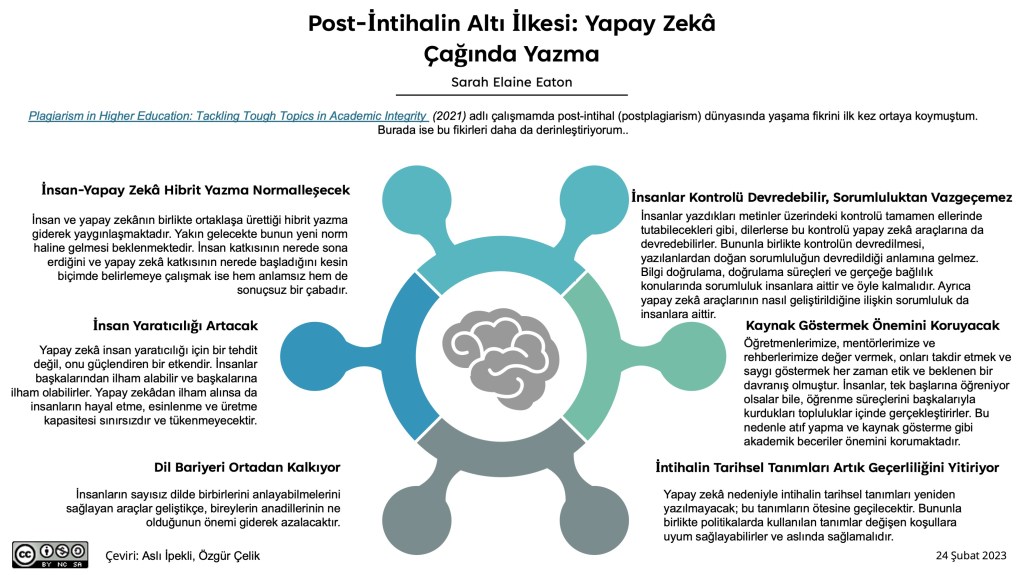
Turkish Translation of the Six Tenets of Postplagiarism
Sarah Elaine Eaton discusses the successful translation of her postplagiarism concepts into Turkish by scholars Aslı İpekli and Özgür Çelik. Their expertise in academic integrity and multilingual contexts enhances the accessibility of the six tenets, promoting dialogue among educators and students. The translated infographic is available as a free downloadable digital resource.
-
Research Integrity Oversight in Canada: A Postplagiarism Perspective
The Canadian Panel on Responsible Conduct of Research is proposing significant changes to research integrity policies, including eliminating the statute of limitations on misconduct allegations and holding institutions accountable for past actions. These reforms aim to enhance oversight and accountability in research, urging public feedback by April 17, 2026.
-
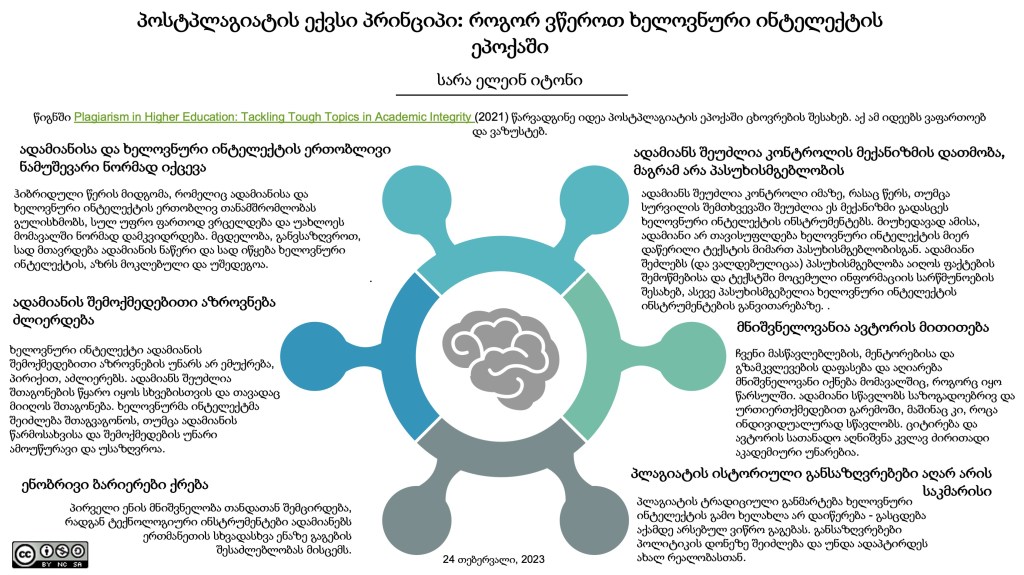
Georgian Translation of the Six Tenets of Postplagiarism Now Available
The Postplagiarism Research Lab has released a Georgian translation of the Six Tenets of Postplagiarism infographic, enhancing educational access in Georgia and beyond. This framework addresses issues in writing with artificial intelligence, emphasizing creativity, accountability, and the evolving definitions of plagiarism. The translation was done by Dr. Giga Khositashvili, an expert in academic integrity.
 Postplagiarism