by Weaver Shaw
The first time I put on my AI-enabled glasses in my office, my reaction was not especially academic. It was closer to a long-drawn-out expletive that starts with the letter f.
I had expected the display to impress me; it did not. I play Skyrim in Virtual Reality, so a small amount of text floating in my field of vision felt almost quaint by comparison. Then, I used the translation function.
I asked a colleague who speaks both English and Mandarin to say something highly specific in Mandarin. I wanted to make the test difficult enough that a vague translation would not count. The glasses translated her speech into English in real time, directly in front of my eyes. The translation was accurate enough that the experience felt less like using software and more like acquiring a new superpower. The expletive came again, but with a much different tone attached.
My first thought was Star Trek.
For years, I had made fun of The Next Generation for imagining a future in which a British man could wander around the universe encountering species who somehow all spoke English. It seemed like a wonderfully colonial vision of space exploration. Somewhere along the way, though, I had missed the fictional technology doing much of the work: the universal translator. Put that technology into a pair of ordinary looking glasses and the premise suddenly becomes less ridiculous.
But the implications became less entertaining almost immediately.
I teach in a multilingual environment. Students regularly speak other languages with one another before class, during group work, in hallways, in elevators, and on transit. Until now, those conversations have been audible to me but usually unintelligible. The glasses change that boundary.
I began wondering what it means to “overhear” a conversation when the people speaking reasonably assume that I cannot understand them.
I have already encountered enough accidentally translated conversations to know that universal understanding is not automatically an uncomplicated good. Humans say ugly things when they believe they are speaking privately. They also say vulnerable things. As an instructor, I could now encounter information that I would never previously have had access to. If two students beside me discuss cheating, insult another student, or reveal that someone in their group is struggling, does my responsibility change because I learned this through AI mediated translation rather than through English?
The glasses became stranger again when they stopped feeling strange.
The teleprompter feature does not scroll at a fixed speed like traditional teleprompters I have used for years. It listens to my voice. If I wander away from the script, the text waits. When I return, it picks up where I left off. After a short time, I stopped thinking much about the mechanism. The information simply appeared when I needed it.
I have experienced this kind of cognitive adaptation before. During the early months of COVID, I was playing Skyrim in VR when a character walked directly past me. My body reacted before my reasoning did. For a brief moment, I panicked because he was not social distancing six feet away. Then my brain caught up. He was not real.
Years earlier, I once looked toward the bottom corner of a paper book expecting to see the time, forgetting that I was not reading on my laptop. I have also tried to enlarge a projected image by pinching the painted wall while presenting from an iPad. I have an example about floppy disks, but I think the point is made without invoking dinosaur technology.
AI-enabled glasses belong to that same history of interfaces becoming invisible, but they move the boundary closer onto the body. Once information can arrive without reaching for a device, familiar distinctions between the tool, the user, and the act of communication become harder to see. If you would like to see a short demo, this YouTube video captures the output from a pair of Even G2 glasses (no camera).
That experience sent me back to Eaton’s (2023) six tenets of Postplagiarism. I wanted to see what they revealed when AI was no longer sitting on a screen in front of me, but moving with me through ordinary teaching, communication, and daily life. I am going to save Tenet number 4 for the end because, well, you’ll see.

Tenet 1: Hybrid Human-AI Writing Will Become Normal
When I first encountered Tenet #1, “Hybrid human-AI writing will become normal,” I interpreted writing fairly literally. I pictured a student sitting at a computer, moving between an AI tool and a document. Even that image is already becoming difficult to sustain. My own students routinely move between applications, platforms, search tools, documents, and devices as they work.
Eaton’s (2026) more encompassing conceptualization of Postplagiarism already extends beyond written production to how emerging wearable technologies become integrated into teaching, learning, communication, and human interaction. Wearing AI-enabled glasses made that broader framing considerably less abstract for me.
Setoutah et al. (2026) describe AI smart glasses as part of a shift toward ambient computing in which technological mediation becomes continuous and responsive to the surrounding context. I was no longer stopping what I was doing to consult a device. The technology was present while I spoke, listened, moved through physical spaces, and interacted with other people.
Tenet 2: Human Creativity Is Enhanced
The second tenet, that human creativity is enhanced, became easier for me to understand once I moved away from thinking about creativity as something AI produces for me. With wearable AI, information can be available without repeatedly stopping to reach for another device or application. That reduction in cognitive and practical friction can leave more room for my own ideas. Offloading some retrieval, organization, or routine production can free attention for the parts of the work that require imagination and judgment.
I also find creativity deeply conversational. Many of my ideas develop because I can talk through them at length, encounter an unexpected response, and follow a line of thinking further than I might have alone. With wearable AI, I can continue that kind of conversation while walking my dog rather than sitting at a computer. Movement is part of how I think and create, and walking is also an important part of how I stay healthy. Research on this type of physical cognitive offloading predates the widespread introduction of AI (Risko & Gilbert, 2016). Ambient AI does not replace the creative process for me. It allows that process to move with me.
Tenet 3: Language Barriers Disappear
The third tenet, that language barriers disappear, feels much less speculative after experiencing real time translation through wearable AI. The significant shift is not simply that translation becomes faster. It is that people may be able to participate without first moving into a dominant language. If communication can happen across languages in real time, speakers may have greater freedom to think and express themselves in the language, dialect, or cultural register that feels most natural to them.
That possibility interests me as a linguist because it could support language preservation rather than linguistic standardization. Wearable translation may reduce some of the pressures that have historically encouraged linguistic assimilation. People who want to become multilingual still can, perhaps with an electric assist, but access to participation may no longer depend so heavily on doing so first.
Tenet 5: Attribution Remains Important
The fifth tenet, that attribution remains important, becomes more complicated when AI assistance is ambient and continuous. Attribution makes sense to me as a way of tracing where knowledge comes from, but less so when it is treated primarily as a marker of private ownership. Wearable AI makes that tension harder to ignore. If my glasses translate a sentence, remind me of a point, or quietly help me recover information during a conversation, documenting each contribution would quickly become absurd.
The underlying question is not whether attribution disappears. It is what attribution is for when knowledge is moving through increasingly hybrid systems. Personally, I am less interested in proving ownership than in preserving enough provenance to understand how an idea, interpretation, or decision came to be.
Tenet 6: Historical Definitions of Plagiarism No Longer Apply
The sixth tenet, that historical definitions of plagiarism no longer apply, exposes something more uncomfortable than outdated policy. Many educators are evaluating students in conditions of information abundance using assumptions formed under conditions of information scarcity. What looks like an enduring moral standard may instead be historical contingency masquerading as morality (Howard, 1995).
Plagiarism only becomes decipherable within a system that has already decided what counts as authorship, what assistance is permissible, and how much intellectual independence a student is expected to perform. Wearable AI makes those assumptions harder to hide because assistance can become continuous, ambient, and inseparable from ordinary communication. Translation, prompts, definitions, and contextual information may arrive without a visible moment of “using AI.”
At that point, asking whether a student “did the work themselves” may reveal more about the institution’s attachment to an older model of cognitive authority than about the student’s actual intellectual contribution.
Tenet 4: Humans Can Relinquish Control, but Not Responsibility
The fourth tenet, that humans can relinquish control but not responsibility, is the one I find most destabilizing when considered through wearable AI. I am not convinced humans ever had the degree of intellectual control we sometimes imagine. Our thinking has always been shaped by teachers, institutions, technologies, cultures, search engines, and the limits of our own experience. Complete control is a tidy fiction. Responsibility is harder.
Consider two instructors preparing to teach the same rapidly developing topic. One works only with the literature they already know and the sources they can personally locate and read. The other uses AI to scan a much larger body of scholarship, surface unfamiliar perspectives, and identify contradictions worth investigating, then verifies the sources on which the teaching will depend. The second instructor has relinquished more control over the process. I am not persuaded that this makes the work less responsible. Under conditions of the explosion of information abundance (Houssard et al., 2026), refusing technological assistance can preserve the appearance of intellectual independence while allowing human habit, disciplinary silos, and simple limits of time to determine what we encounter. Sometimes relinquishing control may be part of exercising responsibility rather than its opposite.
Wearable AI pushes the question further because delegation can occur while we are acting. If my glasses translate a student’s comment incorrectly and I respond to the mistranslation, I cannot reasonably blame the glasses. I chose to rely on mediated information. My responsibility is to understand the limits of that mediation and to verify information when the consequences require it. I already make similar judgments elsewhere. I remove the glasses when I drive, not because augmentation is inherently irresponsible, but because I understand my own psychomotor abilities well enough to know that the additional information could interfere with a task for which I remain accountable.
Perhaps responsibility in a Postplagiarism era is therefore less about preserving control than developing judgment about when to delegate, when to verify, and when to take the glasses off.
Conclusion
Wearable AI did not make me wonder whether humans are becoming dependent on technology. We have always thought with tools, texts, other people, and the limits of whatever knowledge happened to reach us. What the glasses changed was how visible that dependence became when the mediation moved into my field of vision.
Perhaps that is why I keep returning to the fictional Elder Scrolls. The scrolls contain more knowledge than any one reader can fully hold, and what becomes visible depends partly on the reader. Our problem is no longer simply access to information. It is how to exercise judgment while moving through more knowledge than any human can process alone.
Postplagiarism gives us a framework for that world. It does not require us to pretend that human-AI hybridity can be reversed. It gives us a way to think more carefully about what responsibility means when hybridity becomes ambient.
The AI has come off the screen and onto our bodies. Our thinking about them needs to move just as quickly.
Hybrid Human-AI Writing Disclosure (because it isn’t normal yet)
This post was written through a deliberately hybrid process. I developed the argument through an extended conversation with ChatGPT for 4 hours and 42 minutes (not including my human reading time), which interviewed me about my experiences, challenged examples that were not doing enough intellectual work, helped locate sources, drafted passages from my responses, and revised those passages with me iteratively sentence by sentence. I rejected some suggested sources after reading them, redirected arguments, rewrote drafts, and occasionally told the AI to focus.
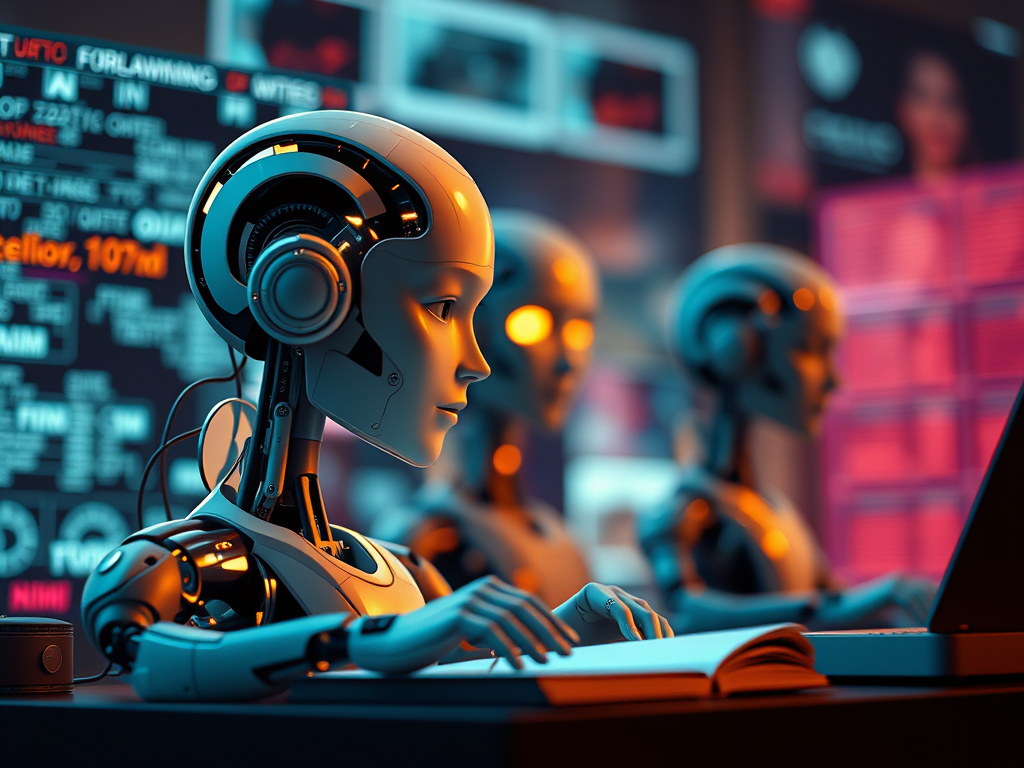
I also used AI to offload some of the mechanical labour surrounding scholarly communication. It checked spelling, punctuation, formatting conventions, and other inherited expectations of academic publishing that require attention without necessarily contributing much to the thinking itself. It helped structure headings for accessibility, develop alt text for images and screen readers, and adapt the finished piece for publication in WordPress. The image combines a real photo I took with an AI-generated setting created to preview the ideas in this blog post
While writing, I wore AI-enabled glasses capable of translation, prompting, and other forms of ambient information access, including time management, water intake, and movement reminders. I also used wearable technology, earbuds, and a YouTube playlist of binaural beats audio as part of the physical and digital environment in which I was thinking. Some ideas emerged while walking. Others came from earlier experiences with virtual reality, teaching technologies, books, my dad, students, colleagues, video games, and several decades of being a human being.
Determining which of these influences deserves attribution, which constitutes assistance, which counts as cognitive offloading, and which is simply part of thinking is left as an exercise for the reader.
I remain responsible for the argument and citation of real, verified sources.
References
Eaton, S. E. (2023). Postplagiarism: Transdisciplinary ethics and integrity in the age of artificial intelligence and neurotechnology. International Journal for Educational Integrity, 19(1), 1-10. https://doi.org/10.1007/s40979-023-00144-1
Eaton, S. E., Kumar, R., Dahal, B., Tang, G., Ramazanov, F., & Moya Figueroa, B. A. (2026). AI smart glasses and the future of academic integrity in a postplagiarism era. Canadian Perspectives on Academic Integrity, 9(1), 1-5. https://doi.org/10.55016/ojs/cpai.v9i1/82885
Houssard, A., Gargiulo, F., Venturini, T., Tubaro, P., & Di Bona, G. (2026). The gerontocracy of science: Attention dynamics in the age of exponential growth. NPJ Complexity (Online), 3(1), 24. https://doi.org/10.1038/s44260-026-00073-3
Howard, R. M. (1995). Plagiarisms, authorships, and the academic death penalty. College English, 57(7), 788-806. https://doi.org/10.2307/378403
Risko, E. F., & Gilbert, S. J. (2016). Cognitive offloading. Trends in Cognitive Sciences, 20(9), 676-688. https://doi.org/10.1016/j.tics.2016.07.002
Setoutah, S., Mohamed, E. A. S., Ishag, K. I. A., Mohamed, W. H. A., & Mohamed, K. O. M. (2026). AI smart glasses, ambient computing, and the public sphere: A mini review of media governance challenges. Frontiers in Human Dynamics, 8. https://doi.org/10.3389/fhumd.2026.1695869
About the author
Weaver Shaw (she/herself) is an educator at the intersection of communication, GenAI, and sustainability, working primarily with multilingual STEM learners at The University of British Columbia – Vantage College. Her work focuses on designing learning environments where emerging technologies, experiential practice, and decolonizing perspectives work together to elevate student voices and support learners as they navigate what comes next in their academic futures. She designs pedagogies that treat uncertainty as productive, and refuses the idea that rigor and accessibility are opposites.
Share this post: Postplagiarism, Now Available in Prescription Strength – https://postplagiarism.com/2026/08/18/postplagiarism-now-available-in-prescription-strength/


Leave a comment