
Tag: ai
-
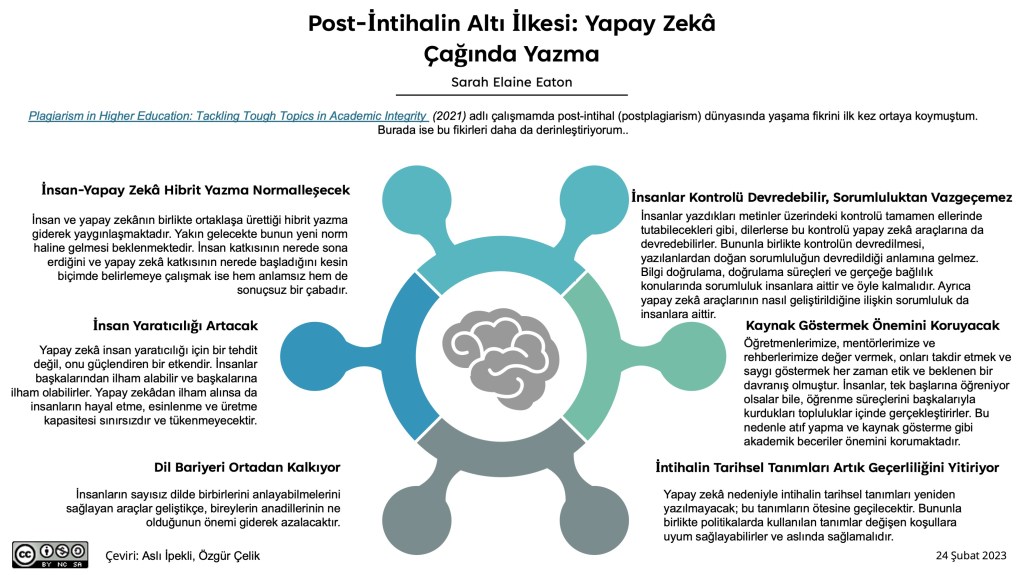
Turkish Translation of the Six Tenets of Postplagiarism
Sarah Elaine Eaton discusses the successful translation of her postplagiarism concepts into Turkish by scholars Aslı İpekli and Özgür Çelik. Their expertise in academic integrity and multilingual contexts enhances the accessibility of the six tenets, promoting dialogue among educators and students. The translated infographic is available as a free downloadable digital resource.
-

Research Integrity Oversight in Canada: A Postplagiarism Perspective
The Canadian Panel on Responsible Conduct of Research is proposing significant changes to research integrity policies, including eliminating the statute of limitations on misconduct allegations and holding institutions accountable for past actions. These reforms aim to enhance oversight and accountability in research, urging public feedback by April 17, 2026.
-
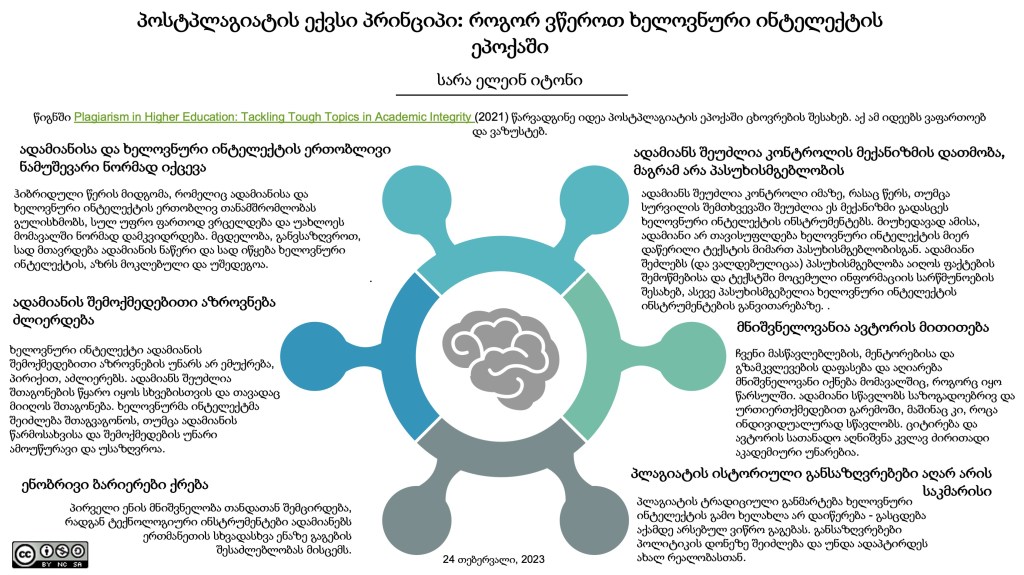
Georgian Translation of the Six Tenets of Postplagiarism Now Available
The Postplagiarism Research Lab has released a Georgian translation of the Six Tenets of Postplagiarism infographic, enhancing educational access in Georgia and beyond. This framework addresses issues in writing with artificial intelligence, emphasizing creativity, accountability, and the evolving definitions of plagiarism. The translation was done by Dr. Giga Khositashvili, an expert in academic integrity.
-

The SETA Framework: Rethinking Academic Integrity in the Postplagiarism Era
On March 4, 2026, Dr. Ruth Baker-Gardner discussed the SETA Framework for academic integrity in a world influenced by AI at the Postplagiarism Speaker Series. She emphasized that education, rather than punishment, fosters integrity and outlined support, education, teaching, and assessment as key framework elements. Institutions must adapt policies to ensure effective learning and ethical…
-

Postplagiarism Perspectives: Comparative Insights from K-12 and Postsecondary Research
The integration of Generative AI in education creates a significant shift in teaching and assessment methods. Research highlights challenges in K–12 and professional education regarding ethical AI use and institutional policies. Bridging the gap between traditional curricula and evolving competencies is crucial for fostering accountability and integrity in AI engagement among students and educators.
-

From Courtrooms to Classrooms: Smart Glasses and Integrity in a Postplagiarism Era
A London judge ruled that a witness was coached via smart glasses during a trial, raising concerns about the integrity of courtroom procedures. The incident highlights the need for institutions to adapt to wearable technology, emphasizing the importance of developing protocols for its use rather than outright bans.
-
Call for Proposals: Special issue on Postplagiarism and Generativism: Human-AI Hybrid Approaches to Ethical Teaching, Learning, and Assessment
Special Issue Call for Papers Postplagiarism and Generativism: Human-AI Hybrid Approaches to Ethical Teaching, Learning, and Assessment For publication in the Journal of University Teaching and Learning Practice Guest editors Background Every new technology brings with it societal and moral panic (Orben, 2020). When the Internet first became popular, concerns about plagiarism increased. Even though…
-
Making Judgment Visible: Designing Authentic Assessment in the Postplagiarism Era
by Naomi Paisley On February 25, 2026, the Postplagiarism Speaker Series welcomed Dr. Sunaina Sharma (Brock University), who presented Designing Authentic Assessment in the Postplagiarism GenAI Era: Making Judgment Visible. The session explored how educators can rethink assessment design as generative AI becomes embedded in everyday learning practices. Positioning postplagiarism as an era defined by…
-
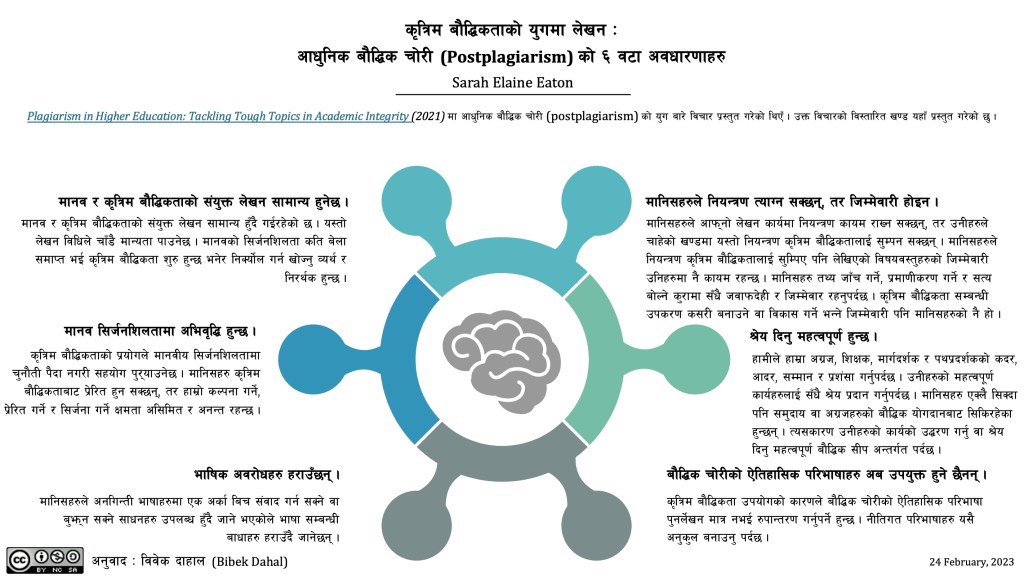
Expanding Global Conversations: Postplagiarism Framework Translated into Nepali
Mr. Bibek Dahal, PhD student in the Postplagiarism Research Lab has translated its infographic into Nepali, aimed at enhancing discussions on AI ethics and academic integrity in Nepal. Dahal’s work addresses the region’s policy landscape, enabling better access to resources for educators and students while fostering inclusive conversations about authorship in the digital age.
-

GenAI, Social Justice, and University Policy Design: Rethinking Academic Integrity through the Post-Plagiarism Framework
Paola Sáenz reflects on a talk by Dr. Beatriz Moya Figueroa in the postplagiarism speaker, addressing AI integration in higher education. The session introduced a readiness framework for evaluating academic integrity policies, highlighting the need for a social justice perspective. Key principles include fostering student autonomy, collaboration, and responsible AI use in education.
 Postplagiarism