
The Postplagiarism Research Lab is pleased to announce the release of the Hebrew translation of the Six Tenets of Postplagiarism infographic (Eaton, 2023). This milestone reflects the growing international interest in the postplagiarism framework and expands its accessibility to educators, researchers, and policymakers in Israel and Hebrew-speaking communities around the world.
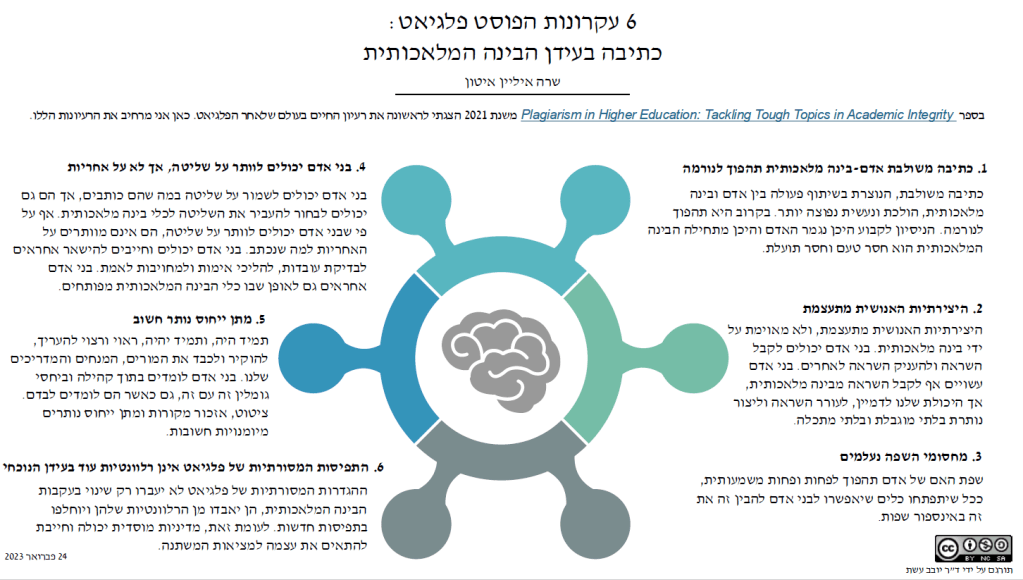
The original Six Tenets of Postplagiarism infographic was developed by Dr. Sarah Elaine Eaton in February 2023 to provide an accessible introduction to the framework. Since then, it has been translated by volunteer scholars into 14 languages: Arabic, Azerbaijani, French, Georgian, Hebrew, Hungarian, Mandarin, Nepali, Persian, Portuguese, Russian, Spanish, Turkish, and Ukrainian. The growing number of translations demonstrates the increasing global reach of the postplagiarism framework and the interest it has generated among educators and researchers across diverse educational and cultural contexts.
The Hebrew translation was prepared by Dr. Yovav Eshet, Digital Learning Designer and Senior Lecturer in the Department of Behavioral Science at Zefat Academic College in Israel. His expertise in educational technology, digital learning, and higher education made him exceptionally well suited for this work.
Making the six tenets available in Hebrew marks another important step in expanding the global conversation about postplagiarism. As artificial intelligence becomes a normal part of teaching, learning, and professional practice, educators around the world are seeking practical frameworks to help guide the responsible and ethical use of AI.
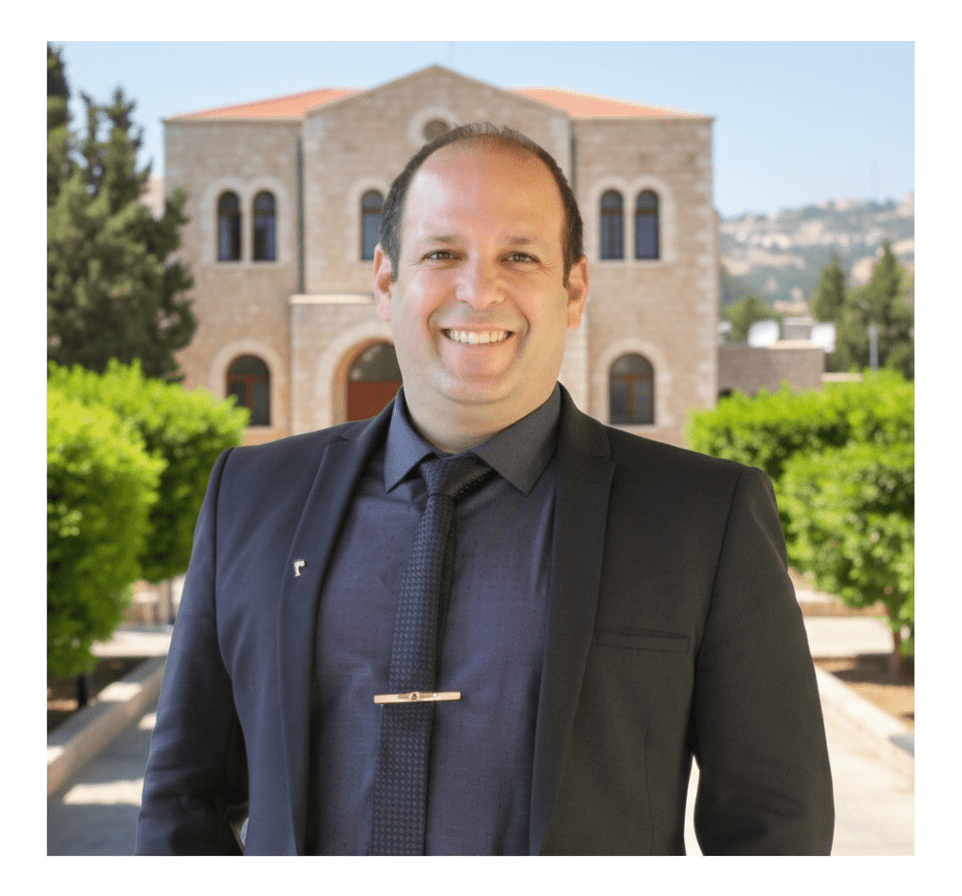
Dr. Yovav Eshet is a Senior Lecturer in the Department of Behavioral Sciences and Digital Learning Designer at Zefat Academic College, Israel. In this role, he leads the professional development and training of academic staff, supporting faculty members in integrating innovative pedagogies, educational technologies, and artificial intelligence into higher education teaching.
His research focuses on academic integrity, the ethical use of artificial intelligence in education, creative thinking, digital learning, and higher education. He has published extensively in international academic journals and serves as a guest editor, review editor, and reviewer for leading scholarly journals.
Dr. Eshet is also an invited keynote speaker at international academic conferences. During the past decade, he has received outstanding lecturer awards from three academic institutions in recognition of his teaching excellence. He teaches research methods, statistics, human resource management, and organizational behavior at undergraduate and graduate levels.
We extend our sincere thanks to Dr. Yovav Eshet for generously contributing his time and expertise to this translation. His work helps make the postplagiarism framework accessible to a broader international audience and supports educators as they navigate teaching and learning in an AI-enabled world.
References
Eaton, S. E. (2023). Postplagiarism: Transdisciplinary ethics and integrity in the age of artificial intelligence and neurotechnology. International Journal for Educational Integrity, 19(1), 23.


Leave a Reply