
In this post, Fuat Ramazanov offers his tips for translating the postplagiarism infographic.
by Fuat Ramazanov
I recently worked on translating an infographic titled “6 Tenets of Postplagiarism: Writing in the Age of Artificial Intelligence”, created by Dr. Sarah Elaine Eaton. Because I do not often translate academic work, I chose to document my approach to this task. In what follows, I present six tips that guided me as I translated the tenets of postplagiarism. This list is not meant to be exhaustive; rather, I hope these suggestions support others who may feel less experienced with translation but are committed to making important ideas accessible across languages. These are not prescriptive steps but recommendations that may help when navigating similar challenges. When outlining the translation process, I identified six key ideas and, taking inspiration from the infographic’s structure, mapped my tips onto the same visual framework.
I first learned about the concept of postplagiarism in 2024 through Dr. Sarah Eaton’s blog post. At the time, I did not explore the idea in depth. As I engaged with it more closely later however, I realized how strongly several of the tenets resonated with my own interests – particularly those connected to human-AI collaboration, creativity, responsibility, and attribution. I mention this because many readers, like me, come across new terms, frameworks, and conceptual tools in academic writing without always pausing to reflect on their significance. Appreciating the value of the postplagiarism framework requires intentional engagement with its tenets, and it is essential for us, as educators, to consider its implications through the lens of our own practices.
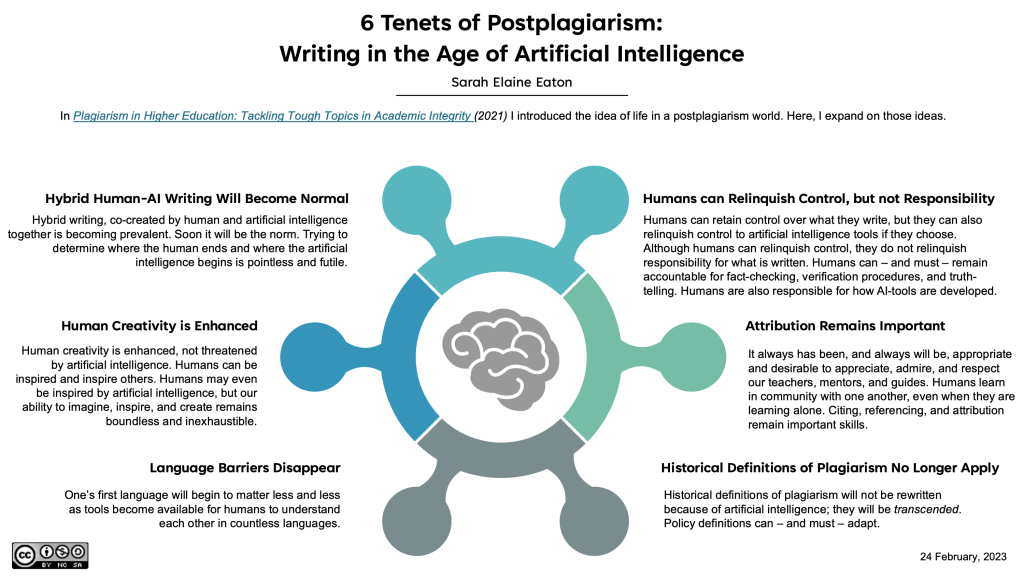
These tenets resonated with me because they reflect my own beliefs about the evolving relationship between humans and artificial intelligence. As someone whose doctoral research focuses on exploring students’ perceptions of the interplay between human and artificial creativity in the creative process, I see the potential for postplagiarism to help frame these discussions. I believe that understanding how creativity unfolds through human-AI collaboration, while emphasizing responsibility and clear attribution, is essential for educating the next generation of thinkers.
As an educator, I aim to help students appreciate human creativity while distinguishing it from artificial creativity. Through practical examples, I encourage them to critically engage with generative AI (GenAI) tools, understanding their strengths and limitations. I believe it is our responsibility as educators to lead open and honest discussions with our students on the ethical and responsible use of GenAI while equipping students with the skills to use these tools effectively and ethically. In my teaching, I design activities integrating GenAI into the creative process. I emphasize the value of co-creation, where students learn to leverage GenAI for rapid idea generation during ideation while maintaining ownership of their final work. Through these activities, I encourage students to appreciate how GenAI tools can enhance human creativity rather than threaten it.
While I made every effort to adhere to grammar rules in the languages of my translation and received positive feedback from my peers and colleagues, who rated my work as good and provided valuable suggestions, I do not consider myself a professional translator and acknowledge that a better version of the translations may exist. Any future feedback will be welcomed and incorporated. This was entirely a volunteer effort.
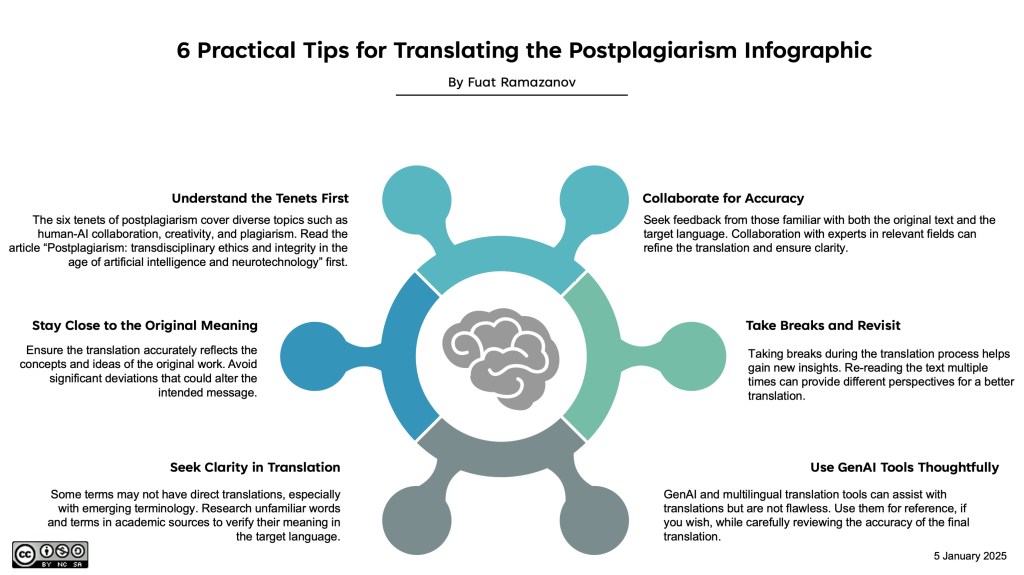
1. Understand the Tenets First
The six tenets of postplagiarism cover wide-ranging topics, such as human-AI collaboration, creativity, and plagiarism, and may initially appear disconnected to some readers. I suggest that before anyone attempts to translate the Postplagiarism Infographic, they familiarize themselves with Dr. Eaton’s article, “Postplagiarism: transdisciplinary ethics and integrity in the age of artificial intelligence and neurotechnology,” which discusses each tenet in more detail. This ensures you are not just translating but also comprehending their deeper meaning.
2. Stay Close to the Original Meaning
When translating, it is important to maintain the meaning of the original text and avoid significant deviations. I focused on ensuring that the translation accurately reflected the concepts and ideas presented in the original work.
3. Seek Clarity in Translation
Some words and terms do not have direct translations, especially as new terminology emerges. For example, I found “hybrid writing” challenging to translate. It was also challenging to find an appropriate word for translating “guides,” as “teachers” seems to be a more suitable term for people who educate us in my target languages. I suggest that anyone translating unfamiliar words or new terms consult sources, such as academic articles in the target language. It is a good idea to research and verify whether the words and terms have been discussed in the target language, especially when working with emerging ideas.
4. Collaborate for Accuracy
Even if you are an experienced translator, it is a good idea to show your work to people familiar with both the original text and the language you are translating into. Preferably, seek feedback from those who understand academic writing. Their insights can help refine your translation and ensure the meaning is clear. I showed my translations to five of my peers and colleagues who were proficient in English and the target language, with backgrounds in journalism, linguistics, and management. I think it is important to stay open to feedback even after the translation is posted. So, stay open to suggestions and corrections.
5. Take Breaks and Revisit
Step away from your translation and revisit it later. I found that taking breaks during my translation process helped me return to the text with fresh eyes, often leading to new insights. Re-reading the , “Postplagiarism: transdisciplinary ethics and integrity in the age of artificial intelligence and neurotechnology,” article multiple times gave me different perspectives and helped me improve my translations.
6. Use GenAI Tools Thoughtfully
GenAI and multilingual translation tools can assist with translations, but they are not perfect. I used tools such as Google Translate and ChatGPT for reference only. Remember, it is a tenet of postplagiarism that we remain responsible for what is translated. One way I used GenAI was to suggest possible uses of unfamiliar words or terms in the language of translation by providing example sentences for reference. I also used GenAI tools to help with spell-checking.
References
creativeHE. (2024, March 13). Empowering creativity: Integrating generative artificial intelligence in the creative process & The Data Reflective Wall. Google Drive. https://drive.google.com/file/d/1AeTrHMWNw0P3TxI2P6tFTU7MlyMVXDiU/view
Eaton, S. E. (2023, February 25). 6 tenets of postplagiarism: Writing in the age of artificial intelligence. Learning, Teaching and Leadership. https://drsaraheaton.com/2023/02/25/6-tenets-of-postplagiarism-writing-in-the-age-of-artificial-intelligence/
Eaton, S. E. (2023). Postplagiarism: transdisciplinary ethics and integrity in the age of artificial intelligence and neurotechnology. International Journal for Educational Integrity, 19(1). https://doi.org/10.1007/s40979-023-00144-1
Eaton, S. E., & Anselmo, L. (2023, January). Teaching and learning with artificial intelligence apps. Taylor Institute for Teaching and Learning. https://taylorinstitute.ucalgary.ca/resources/teaching-with-AI-apps
Worwood, M. J., & Burnett, C. (Hosts). (2024 – present). Best practices for experimenting with generative AI in the classroom with Fuat Ramazanov [Audio podcast episode]. In Fueling Creativity in Education Podcast. https://www.youtube.com/watch?v=uCFcRnTOtLc
_________
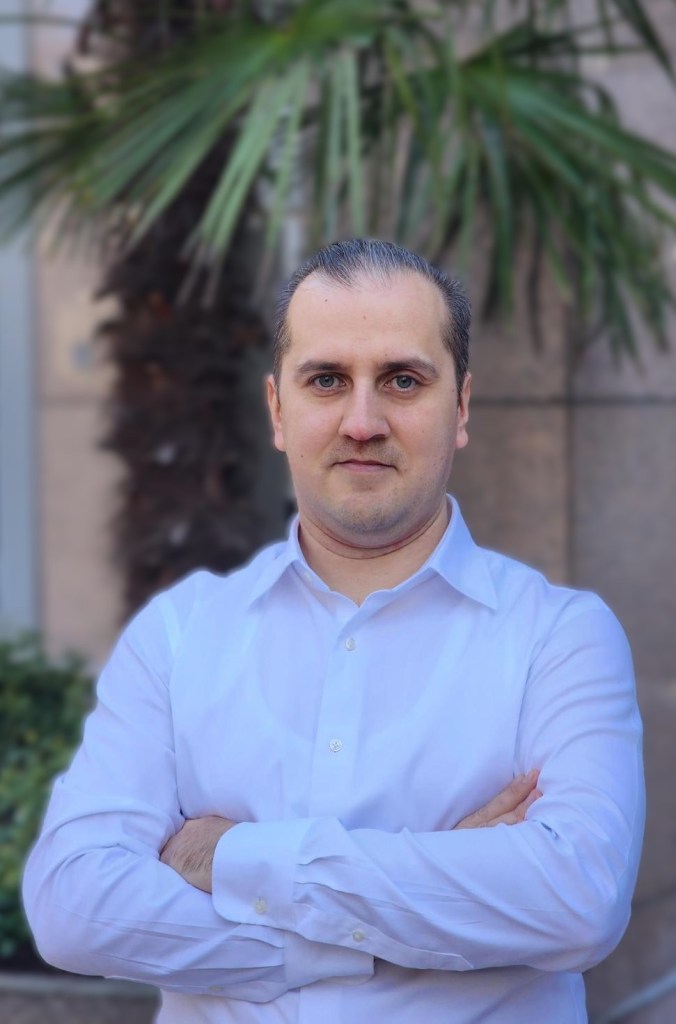
Fuat Ramazanov is an adult educator who is deeply interested in the nature of creativity, the practice of creative teaching, and the ways AI is reshaping how learners engage with knowledge. He examines co-creation and the interplay of human and artificial creativity through a Postplagiarism lens, positioning his work within this framework, and is committed to integrating innovative, AI-informed pedagogies in higher education.
Share this post: Six Practical Tips for Translating the Postplagiarism Infographic – https://postplagiarism.com/2026/01/06/six-practical-tips-for-translating-the-postplagiarism-infographic/
 Postplagiarism
Leave a comment