
Category: artificial intelligence
-

New Open Access Chapter: “Pedagogical Ethics: Navigating Learning in a Generative AI-Augmented Environment in a Post-Plagiarism Era”
The chapter “Pedagogical Ethics: Navigating Learning in a Generative AI-Augmented Environment in a Post-Plagiarism Era,” co-authored by Sarah Elaine Eaton and Mohammad Keyhani, discusses the implications of generative AI in education, focusing on academic integrity and pedagogical ethics. It emphasizes learner agency and offers guidance for educators, available as open access.
-
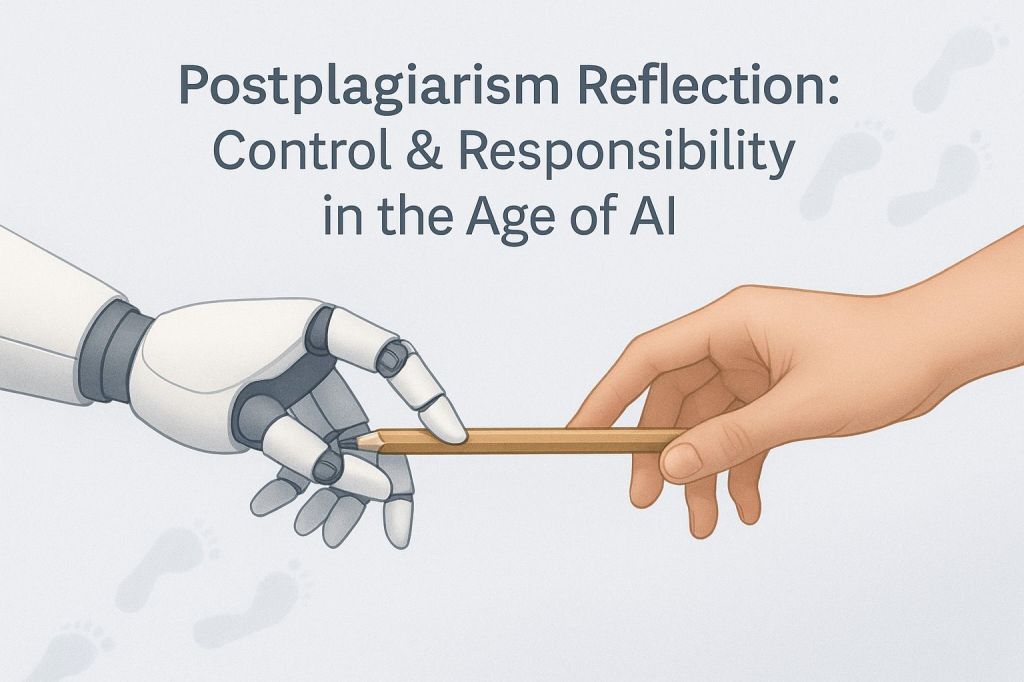
Postplagiarism Reflection: On Control & Responsibility
In our digital age of remixing, re-using, sharing, and collaborative creation, we’re challenged to rethink ownership. Postplagiarism invites us to embrace a profound paradox: We can relinquish control (in part or in whole) to an AI app to either generate work on our behalf or provide a starting point that we then build upon. But,…
-

Teaching Fact-Checking Through Deliberate Errors: An Essential AI Literacy Skill
This teaching resource presents a method for enhancing AI literacy by engaging students in fact-checking AI-generated content with intentional inaccuracies. It emphasizes systematic verification processes, critical evaluation of sources, and understanding AI error patterns, equipping students with essential skills to discern accurate information in a postplagiarism landscape.
-

Embracing AI as a Teaching Tool: Practical Approaches for the Postplagiarism Classroom
Artificial intelligence (AI) can be a useful educational tool in the postplagiarism classroom. Effective strategies include incorporating AI into discussions, enhancing critical thinking, teaching fact-checking, and addressing ethical considerations. This shift fosters student engagement with technology, emphasizing evaluation over mere content creation and preparing them for future challenges.
-

Postplagiarism in Times Higher Education
Karen Kenny discusses the concept of Postplagiarism in an article for Times Higher Education. The piece highlights evolving perspectives on academic integrity and originality in scholarly work. This is the first time postplagiarism has been mentioned in THE.
-
Understanding Postplagiarism: Ethics in the Digital Age
Postplagiarism is defined as a new era where advanced technologies, such as AI and brain-computer interfaces, change intellectual engagement. It emphasizes the importance of attribution and accountability, contrary to absolute relativism or merely relying on technology. Critical thinking and digital literacy are crucial in teaching ethical interactions with these tools.
-
The Role of Postplagiarism in Understanding AI-Generated Content
A recent TechCrunch article by Kyle Wiggers examined a contentious debate over plagiarism and AI content generation, focusing on the conversation between TechCrunch’s Devin Coldewey and Aravind Srinivas, CEO of Perplexity AI, during the Disrupt 2024 conference. AI tools like Perplexity have generated concerns in both educational and media circles for their ability to replicate…
-

Artificial intelligence tools may widen the gap between international students from different language backgrounds
The rise of AI tools has bridged language gaps for international students but reveals challenges, particularly language bias. While some languages benefit from robust training data, others lag, affecting communication and academic performance. This digital divide necessitates targeted support and inclusive assessment methods to ensure equitable opportunities for all students regardless of their native language.
-
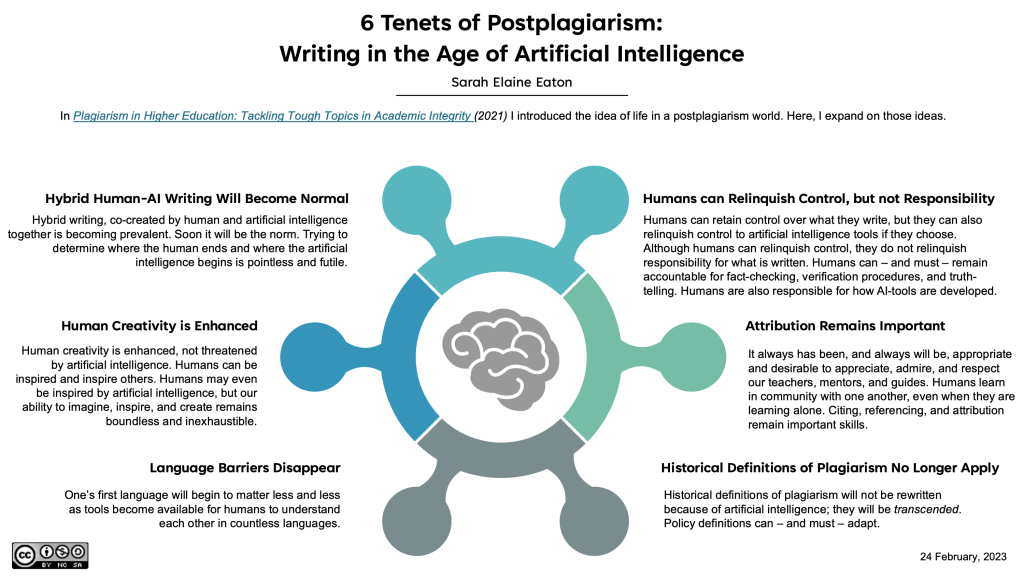
 Postplagiarism