

In this post, Werklund Doctoral Candidate Naomi Paisley reflects on a recent Postplagiarism Speaker Series hosted by the Centre for Artificial Intelligence Ethics, Literacy, and Integrity (CAIELI) at the University of Calgary. The session featured Fuat Ramazanov (Acsenda School of Management), whose presentation explored how postplagiarism tenets can be taught through an AI-enhanced creative problem-solving model.

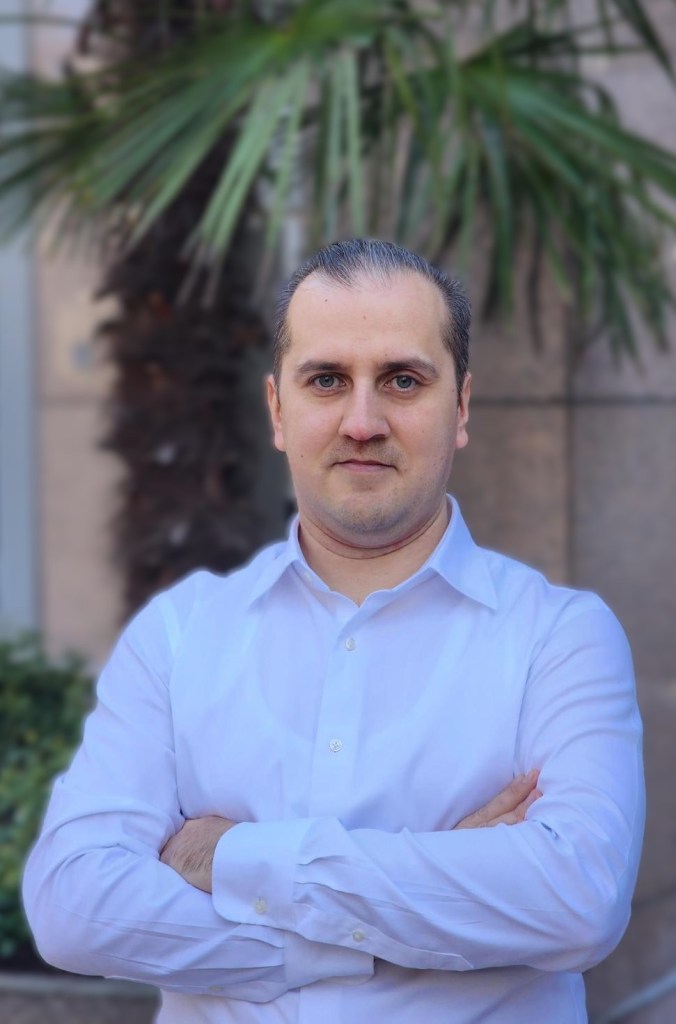
On January 14, 2026, the Postplagiarism Speaker Series at the Centre for Artificial Intelligence Ethics, Literacy, and Integrity featured a presentation by Fuat Ramazanov, Program Director at the Acsenda School of Management and doctoral student at the University of Calgary. His talk, Teaching Postplagiarism Tenets Through AI-Enhanced Creative Problem-Solving, explored how the six tenets of postplagiarism defined by Dr. Sarah Elaine Eaton can be meaningfully applied beyond writing tasks, integrating them into creative problem-solving (CPS) pedagogy.
Ramazanov addressed a timely pedagogical challenge, how can educators help students engage ethically and creatively with AI tools while maintaining human agency, responsibility, and judgment? By reframing the postplagiarism tenets onto a structured CPS model, the presentation provides a framework for understanding human–AI co-creation as a teachable, assessable process countering the perception of AI as an impediment to learning.
Ramazanov explored postplagiarism as a creative process framework, using the Creative Problem Solving (CPS) model that encompasses identification, idea generation, idea evaluation, and implementation to provide a clear structure for implementing the six tenets in classroom practice. His discussion on divergent and convergent thinking was insightful especially his clear alignment to the six tenets of postplagiarism. AI tools were positioned as especially effective during divergent stages, where generating numerous and diverse ideas is beneficial, while convergent stages intentionally re-center human judgment, evaluation, and responsibility.
His session challenged assumptions about AI enhancing or diminishing creativity. Ramazanov pointed to research and his own teaching experience showing how AI helps students generate more ideas and develop them in greater detail. He acknowledged that students themselves doubt whether AI can produce truly original work. Rather than seeing this contradiction as a problem, he treated it as an opportunity, a chance for students to think more carefully about creativity, intelligence, and who gets credit for ideas when humans and AI work together.
Ramazanov also discussed visible learning through simple strategies such as color-coded attribution (distinguishing human-generated and AI-generated ideas), structured prompts, and iterative reflection, where students are guided to see AI as a collaborator rather than a tool for cognitive offloading. This approach aligns closely with the ethical foundations of postplagiarism, reinforcing that responsibility and accountability always remain with the human learner.
Share this post: Beyond Writing: Teaching Postplagiarism Through Creative Problem Solving – https://postplagiarism.com/2026/01/26/beyond-writing-teaching-postplagiarism-through-creative-problem-solving/
____________________________
Naomi Paisley is a research assistant and doctoral student in education whose work explores academic integrity, postplagiarism, and assessment design in the age of artificial intelligence. Her research focuses on bridging the gap between post secondary institutions support in accounting students understanding of academic integrity and what is expected of them when they enter the workforce.
 Postplagiarism
Leave a comment