
In our digital age of remixing, re-using, sharing, and collaborative creation, we’re challenged to rethink ownership.
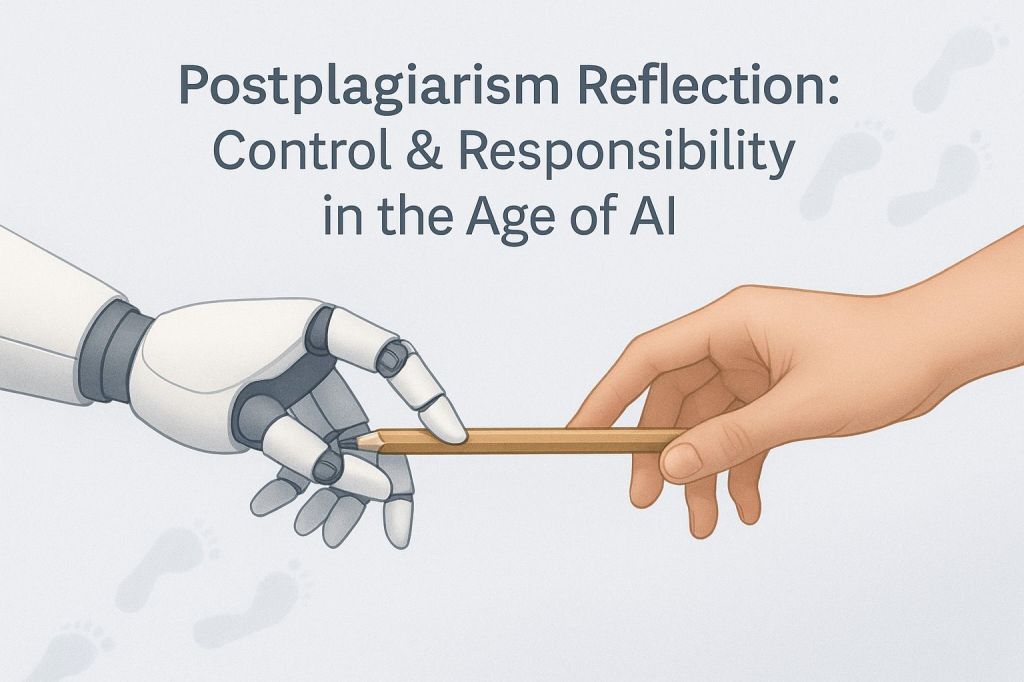
Postplagiarism invites us to embrace a profound paradox: We can relinquish control (in part or in whole) to an AI app to either generate work on our behalf or provide a starting point that we then build upon. But, regardless of how we might use AI, we do not relinquish responsibility. We remain accountable for fact-checking and truth-telling.
Responsibility remains a foundation of ethics and integrity.
We remain responsible for what we create and how we create it.
We acknowledge and give attribution to those from whom we have learned: our sources, our teachers, our mentors, and others who have informed and influenced our thinking. We understand the ethical implications of our borrowing and consider the impact of our contributions.
We can co-create with technology in ways that incorporate mindfulness, intentionality, and respect in the endless conversation of expression.
What have you created today that you’re willing to let go of, but still stand behind?
________________________
Share this post: Postplagiarism Reflection: On Control & Responsibility – https://postplagiarism.com/2025/05/07/postplagiarism-reflection-on-control-responsibility/
Sarah Elaine Eaton, PhD, is a Professor and Research Chair in the Werklund School of Education at the University of Calgary, Canada. Opinions are my own and do not represent those of my employer.
 Postplagiarism
Leave a comment